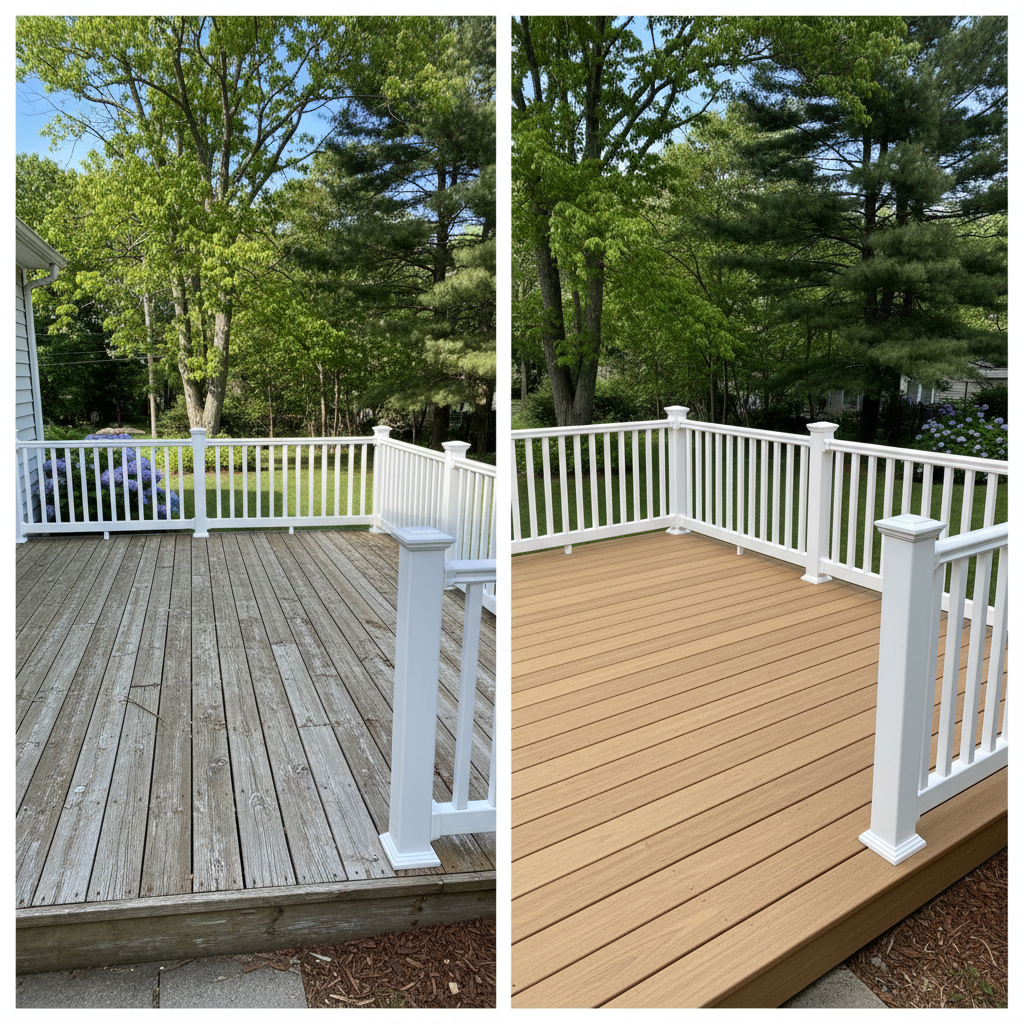
Got a deck that's seen better days? Maybe a few boards are rotting, or some fasteners are popping up. It's a common sight around Arlington, especially with our tough winters and humid summers, isn't it? When you're looking at those issues, you've got a couple of main paths: try to patch up just the bad spots, or bite the bullet and replace a whole section of boards. Let's talk about what each really means for your wallet, your weekend, and how long that deck's gonna last.
Spot Repair: The Quick Fix
This is where you just swap out the worst offenders. A couple of cracked boards, a section where the wood's really gone soft, or maybe a few splintered pieces. You pull those out, cut new ones to fit, and screw 'em down. Sounds easy, right?
Cost & Time
- Materials: Cheaper upfront. You're only buying a few boards, some screws, maybe a gallon of stain. If you're matching existing wood, like pressure-treated pine, it's pretty affordable per board.
- Labor: If you're doing it yourself, it's just your time. If you hire someone, it's usually a quicker job, so less hourly labor.
- Tools: You probably already have a saw, drill, and tape measure.
Durability & Maintenance
Here's the catch. If those few boards failed because they were old, what about the ones right next to them? They're probably not far behind. You might fix three boards this year, and then another three next year. It's a bit like playing whack-a-mole. You're stopping the immediate problem, but not really addressing the overall age of the deck. You'll still need to clean and seal the whole deck regularly, and those new boards might not take stain exactly like the old ones, leading to a patchwork look.
Appearance
Unless your deck is brand new, those new boards are going to stick out. They'll be a different color, a different texture. Even with the same stain, new wood absorbs it differently than aged wood. It's not usually a seamless look, which might bother you if you're particular about curb appeal.
Full Section Replacement: The More Substantial Fix
This approach means taking out a larger area of boards – maybe an entire section of the deck, or all the boards on one side. You're not just replacing the obviously bad ones, but also the ones that are showing significant wear or are likely to fail soon.
Cost & Time
- Materials: More expensive upfront, no doubt. You're buying more lumber, more fasteners. If you're upgrading to a composite material, that cost jumps significantly, but it's often worth it in the long run.
- Labor: More involved. It takes longer to remove and replace a larger number of boards. If you're hiring a pro like Arlington Deck Solutions, this will be a bigger project.
- Tools: Similar tools, but potentially more wear and tear on them.
Durability & Maintenance
This is where you get the real bang for your buck. By replacing a whole section, you're resetting the clock on that part of the deck. You're getting consistent material, consistent fasteners, and a more uniform surface. This means fewer pop-ups, fewer splinters, and a much longer period before you have to worry about repairs again. Maintenance becomes simpler because you're dealing with a consistent surface that will age and weather uniformly.
Appearance
Much better. If you replace an entire section, or even all the walking surface, you get a fresh, uniform look. The new boards will all match, and they'll take stain or weather consistently. This makes a huge difference in how your deck looks from the street and how much you enjoy spending time on it.
My Recommendation for Arlington Homeowners
Look, I've seen a lot of decks around Arlington, from the older homes in the Heights to the newer builds near Spy Pond. Our climate is tough on wood. We get those freezing and thawing cycles, heavy snow loads, and then intense summer sun. These conditions really accelerate wear and tear.
My honest recommendation? If you've got more than just a couple of isolated issues, and your deck is more than 10-15 years old, you're almost always better off going with a full section replacement. Trying to chase down every bad board with spot repairs usually ends up costing you more in the long run, both in money and frustration. You'll have a deck that looks patched together, and you'll be doing repairs again sooner than you'd like.
Think about it this way: if you've got a few potholes on a street, the town doesn't just patch them forever. Eventually, they repave the whole section. It's more work upfront, but it's a better, longer-lasting solution. The same goes for your deck. A more comprehensive approach gives you a safer, more attractive, and ultimately more durable outdoor space. It's an investment that pays off in enjoyment.
When Spot Repair Makes Sense
There are times when a spot repair is totally appropriate. If your deck is relatively new (say, under 10 years old) and you've had an isolated incident – a heavy planter caused some rot in one small area, or a single board got badly damaged by something falling on it – then absolutely, just replace that one board. But if you're seeing widespread signs of aging, like multiple soft spots, widespread splintering, or a general feeling that the deck is just 'tired,' then it's time to think bigger.
Give us a call at Arlington Deck Solutions if you want to talk through your options. We can take a look and give you an honest assessment of what makes the most sense for your deck and your budget.