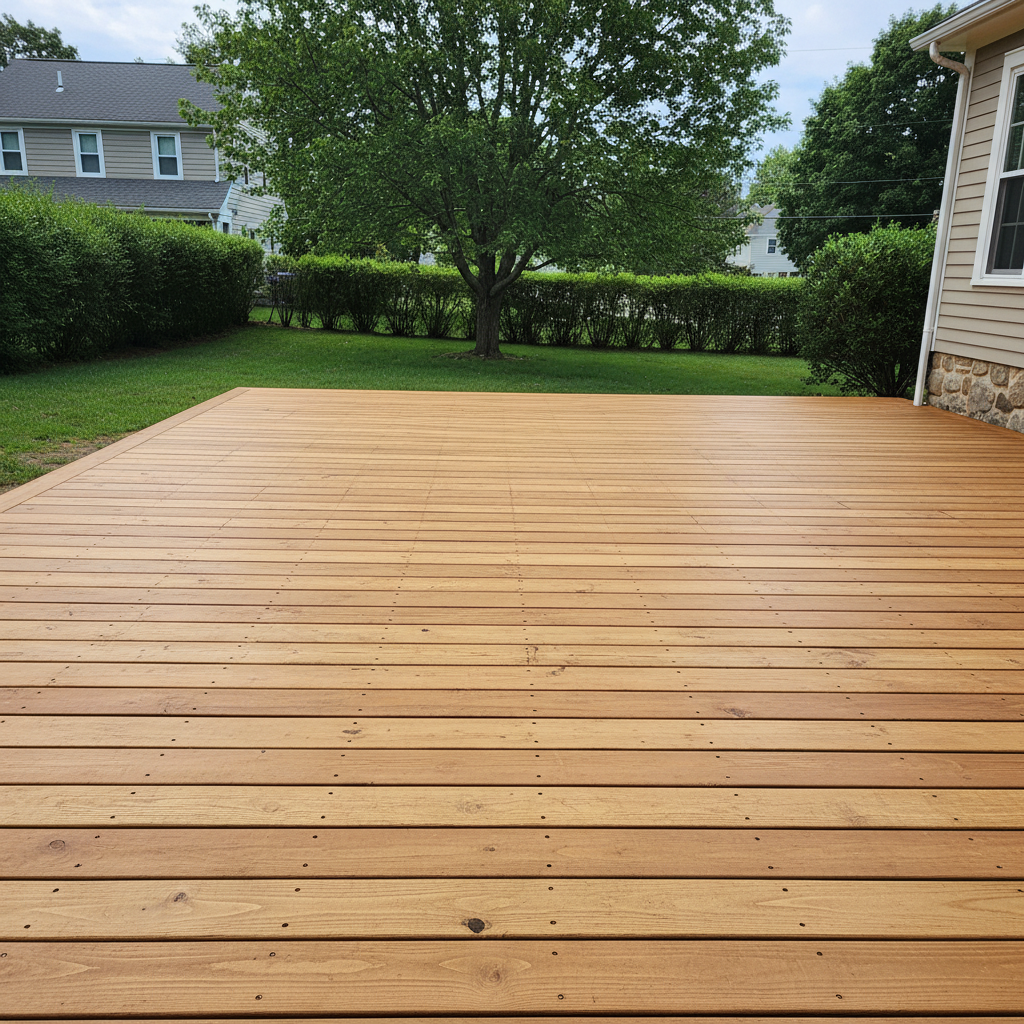
New England weather is brutal on outdoor wood. Between the heavy damp snow we get off the Minuteman Bikeway all winter and the humid summer stretches that trap moisture in every crevice, your Deck takes a beating year-round. If you want to keep your outdoor space safe and avoid a massive replacement bill down the road, you have got to stay ahead of routine upkeep. Arlington Deck Solutions sees too many homeowners wait until boards are rotting through before they pay attention, and by then, a simple fix turns into a major construction project.
Here is what regular maintenance actually looks like if you want your Deck to last. Start with a thorough cleaning every spring. Winter leaves behind layers of wet leaves, dirt, and organic grime that love to eat away at wood finishes. Grab a stiff-bristle brush, some mild Deck cleaner, and rinse it off gently. Avoid blasting the wood with a high-pressure washer held too close, because you will just gouge the grain and splinter the surface. Once it is dry, check the moisture content before even thinking about stain or sealer. If water droplets sink right into the wood instead of beading up, it is time for a fresh coat of protection.
Spotting the Warning Signs Early
Catching problems early saves you money and keeps your family safe. Walking across your Deck boards should not feel like a guessing game. Keep an eye out for these red flags:
- Soft, spongy spots near fastener heads or where Deck boards butt together.
- Wobbly posts or railings that wiggle when you lean on them.
- Rust stains weeping out from around nails or screws, which means the metal is corroding and losing its grip.
- Noticeable sagging in the middle of a span or near your back door threshold.
If you poke a screwdriver into a suspicious spot and the metal sinks a quarter-inch deep without much resistance, that wood is done for. You are dealing with rot, and painting over it will not solve anything.
How to Extend the Lifespan of Your Repairs
When you do patch up a section or replace a few worn-out Deck boards, small details matter. Always use hot-dipped galvanized or stainless steel fasteners. Regular screws will react with pressure-treated lumber, rust out within two seasons, and leave your boards loose again. Make sure debris is not piling up between the Deck boards or against the ledger board attached to your house. That gap is crucial for airflow. If leaves pack in tight, moisture gets trapped against your siding and framing, creating a breeding ground for hidden rot.
At Arlington Deck Solutions, our team spends a lot of time fixing issues caused by poor initial flashing or trapped moisture behind ledger boards. If you notice your ledger pulling away from the house, or if the flashing above the Deck is bent or missing, do not try to jack that up yourself. That is structural work tied directly to your home foundation.
When to Call a Professional
Some jobs are great weekend DIY projects, but others require a professional touch. If your support posts are shifting, your stairs are pulling away from the landing, or you spot widespread structural rot in the framing underneath, step back and call for backup. Deck collapses usually happen slowly under a full load of people during a summer cookout, and they almost always start with unseen framing failures underneath. A quick inspection by someone who builds these things every day will make sure your Deck is solid and keep your family safe all year long.